Intent Score
Ranks candidates by motivation using four behavioural-science constructs: attitude (how positively they feel about the employer), perceived fit (their sense they could belong here), self-efficacy (confidence they could succeed in the role), and engagement actions (completion rate, effort quality and optional tasks taken). Not clicks or page views.
Most intent tools measure engagement activity. The intent score measures intent the way the research defines it.
Skills assessment across four dimensions
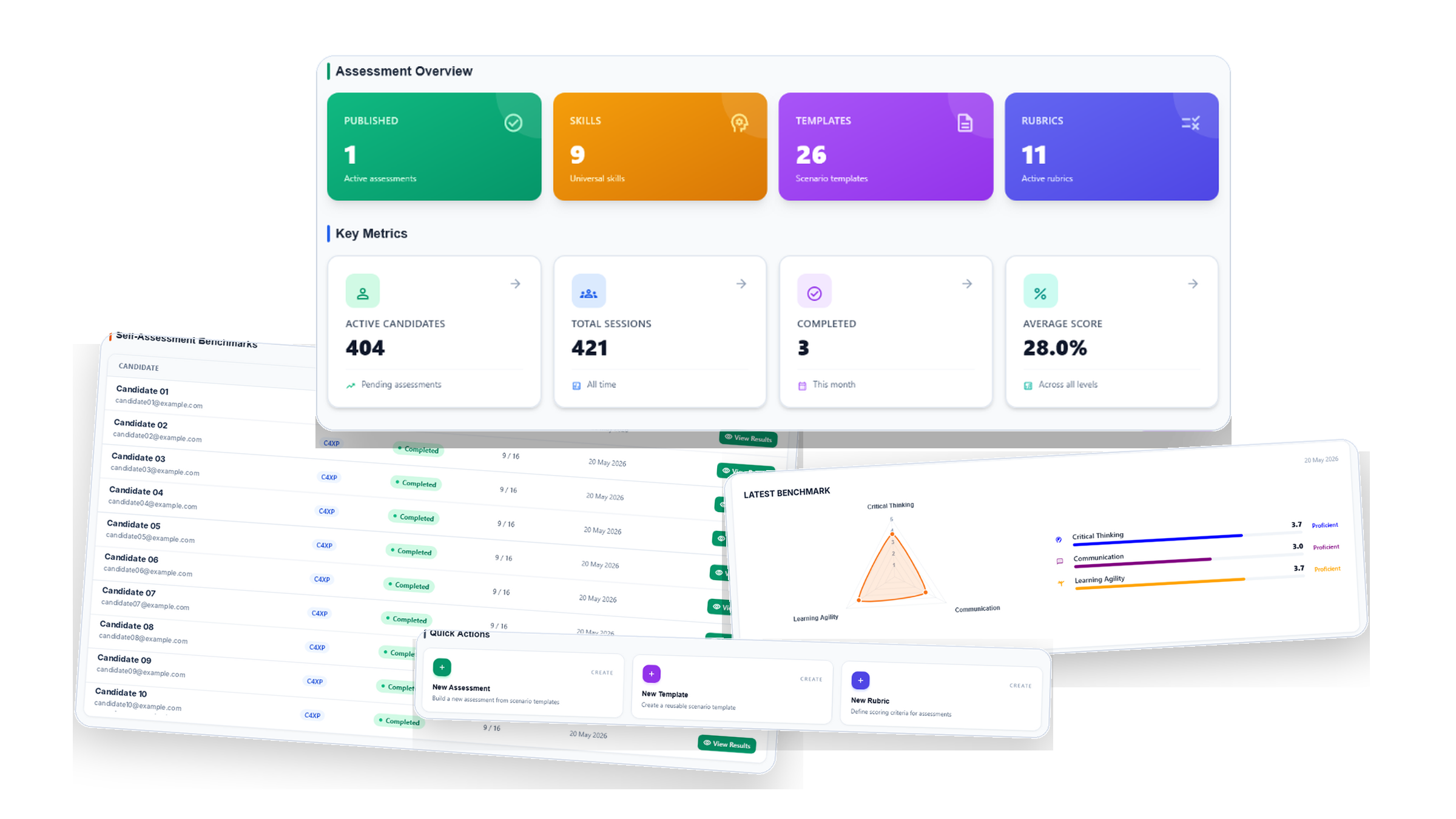
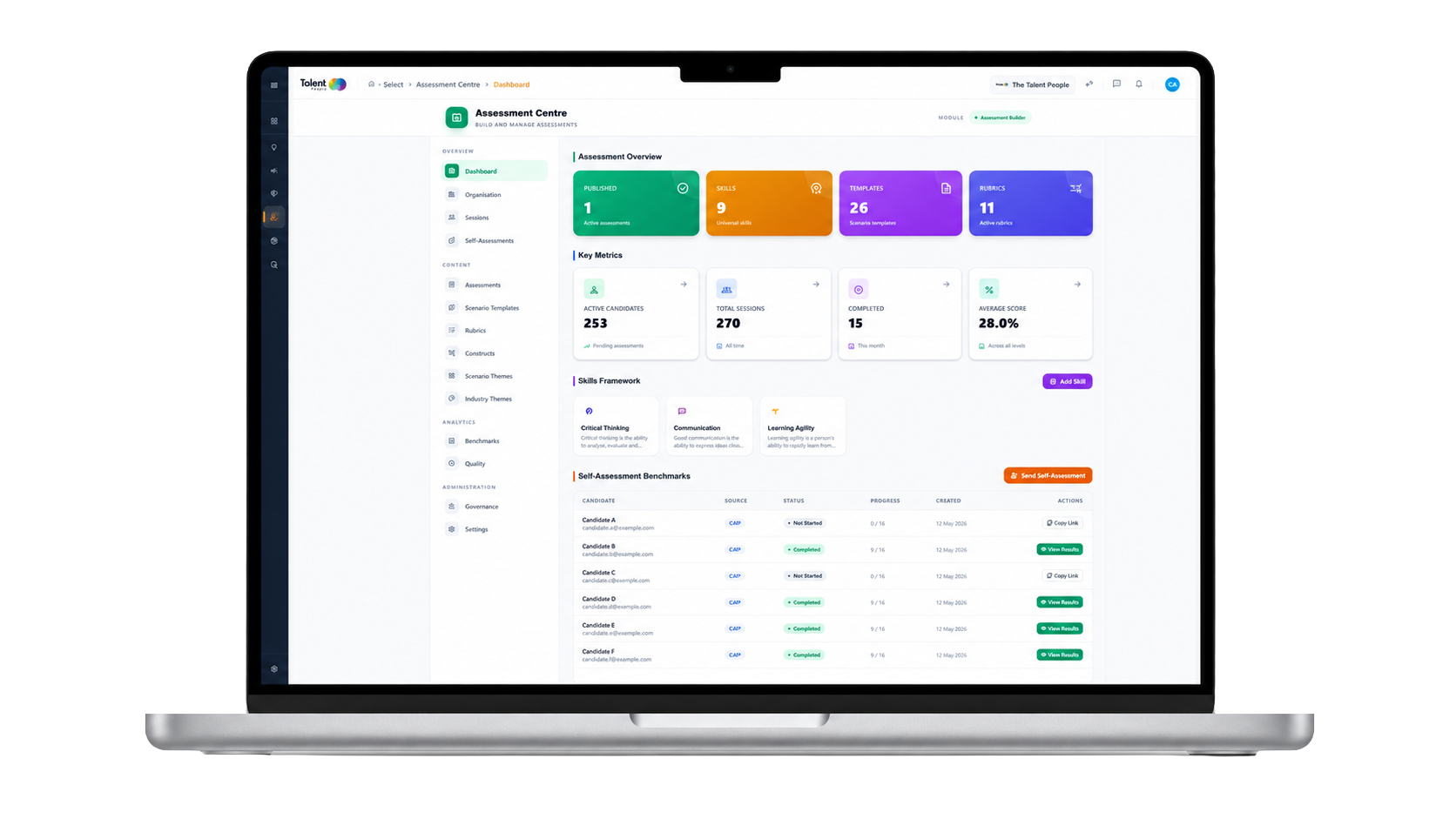
Measures Communication, Critical Thinking, Learning Agility and AI Skills through real work tasks. Repeat measurement tracks improvement over time.
These are the four skills that predict success in an AI-enabled workplace. 87% of HR leaders expect new hires AI-ready from day one. No other assessment measures AI skills in context.
Criteria-led AI scoring
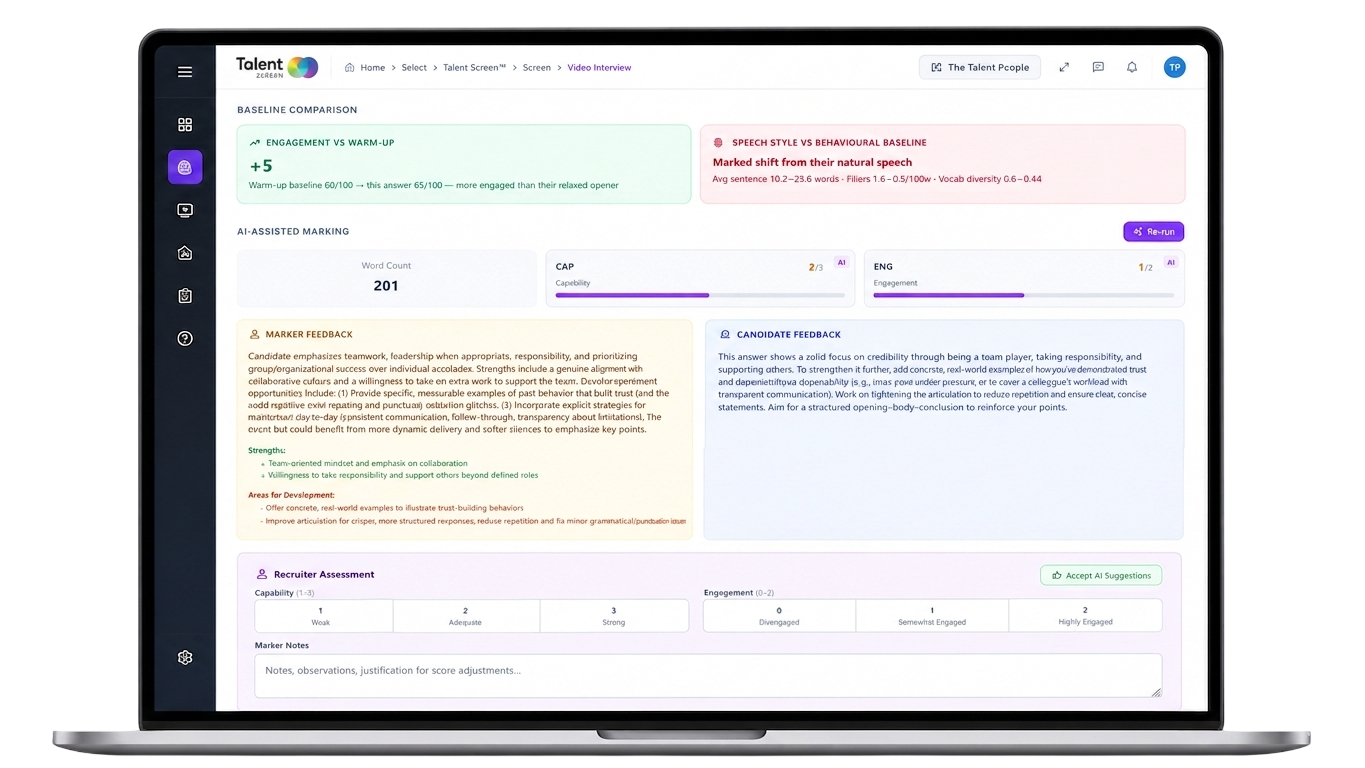
The scoring rubric is set before any candidate completes. No comparative ranking. No training on historical hire data. Human calibration throughout.
A strong cohort does not penalise you. A weak cohort does not advantage you. Every decision is explainable at individual candidate level.